

Zirconia or acrylic for a full arch of fixed teeth, which one actually lasts longer? Zirconia, and it is not particularly close. Acrylic hybrids were the standard for years because they were cheaper to make and easy to repair, but they chip, stain and wear down in ways zirconia simply does not. The real question is not which material wins on paper. It is which one makes sense for your bite, your budget and how long you plan to keep the result.
Here is how the two materials compare where it matters: daily wear, strength, repairs and total cost over ten years, not just the price on day one.

What the Two Materials Actually Are
An acrylic hybrid is a set of denture-style teeth processed in pink and white acrylic, built over a metal framework that screws onto the implants. It looks good when it is new. Acrylic is a plastic, though, and it behaves like one over time: it absorbs stains, loses its polish and gets brittle.
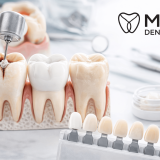
A zirconia bridge is milled from a solid block of zirconium dioxide, a ceramic used in crowns for decades, then stained and glazed to look like natural teeth and gums. At MD Dental the zirconia bridge sits on a titanium bar, which spreads bite forces across the implants instead of concentrating them on the ceramic. Same implants underneath, very different material on top.
How They Wear, Year After Year
Acrylic teeth wear flat. If you grind your teeth or eat a normal varied diet, the chewing surfaces lose their shape within a few years, your bite changes subtly, and individual teeth can pop off the base. Repairs are cheap and quick, which is the honest advantage of acrylic, but they are also recurring. Staining is the other slow problem: coffee, tea and red wine work into the surface, and professional polishing only gets you so far.
Zirconia barely wears at all. It does not absorb stains, the polish holds, and the bite you were given on delivery day is essentially the bite you still have years later. When something does go wrong with zirconia it tends to be all or nothing, a crack rather than a slow decline, which is exactly why the warranty behind it matters more than the repair price.
Strength Is Not Just About the Teeth
People compare the two materials as if the teeth work alone. They do not. A full-arch bridge is a beam, and what it is made of and what it sits on decide how forces travel into the implants. A zirconia bridge on a titanium bar is a rigid, passive structure: load spreads across all the implants at once. A flexible acrylic base flexes microscopically with every bite, and that movement concentrates stress at the screw connections and the front implants.
This is also why the number of implants and their positions matter more than the brand name on the brochure. Four well-placed implants under a rigid zirconia bridge will outlast six poorly angled ones under acrylic. The plan comes first, the material second.
What Each One Really Costs Over Ten Years
Acrylic usually wins the day-one quote. Then the meter starts running: tooth replacements, relines of the pink base, stain removal, and eventually a full remake when the teeth have worn down, commonly somewhere in the seven to ten year window. None of these bills is huge. Together they quietly close much of the gap.
Zirconia costs more upfront and then mostly stops costing. Our All-on-4 with a zirconia bridge is $9,980 per arch, and the lifetime warranty on the bridge is included in that price: if it cracks or breaks under normal use, we replace it. For contrast, at least one national brand sells its zirconia arch for less upfront and then charges $198 a year for the lifetime warranty, every year, for as long as you want the coverage. Read the warranty line of any quote as carefully as the price line. Our full price breakdown is on the dental implants cost page.
Trying to Decide for Your Own Case?
Material choice is not really a shopping decision, it is a planning decision. Your bone, your bite force, whether the opposing teeth are natural, implants or a denture, and whether you grind at night all push the answer one way or the other. A strong grinder with natural teeth on the opposite arch is the classic case where acrylic becomes a false economy.
How Long Each One Lasts in Real Life
With acrylic, the honest expectation is a working life of about five to ten years before wear, staining and repairs add up to a remake. Some patients stretch it further with gentle habits and regular maintenance, and some wear through it faster, especially grinders. The implants underneath are not the problem; the plastic on top of them is the consumable part.
Zirconia changes what wears out. The ceramic itself is expected to serve well beyond a decade, and in most cases far longer, because it does not wear flat or absorb stains. What still needs watching is everything around it: the screws, the soft tissue and the implants, which is why the follow-up visits in your plan matter even when nothing hurts. When clinics talk about a restoration lasting twenty years or more, zirconia on a rigid bar is the construction they are describing.
One more difference shows up in year three or four, not year one. Acrylic patients often describe their teeth as looking tired before they stop working. Zirconia patients usually skip that phase entirely. How your teeth look in the second half of their life is part of what you are paying for.
When Acrylic Is Genuinely the Right Choice
Sometimes it is. If the budget is hard and fixed, acrylic gets you fixed teeth now instead of no teeth, and the bridge can be converted or remade later. It can also make sense as a long-term temporary while other health or financial pieces fall into place. What we would not do is sell acrylic as the equal of zirconia at a zirconia-adjacent price, which happens more often than it should. If a quote seems high, ask one question: what material, exactly, and what does the warranty cover, exactly.
The Bottom Line
Zirconia lasts longer, wears slower, stains less and, with a real warranty behind it, costs less over a decade than most people expect. Acrylic is cheaper to start and easier to repair, and for some budgets that trade is worth making knowingly. The mistake is making it unknowingly.
If you are comparing full-arch quotes and the materials and warranties are buried in fine print, bring them in. MD Dental provides full-arch implant treatment in Fort Lauderdale, and a free consultation with a 3D CT scan gets you a written plan that names the material, the price and the warranty in plain language, so you can compare your options on facts instead of brochures.
THE PATIENT AND ANY OTHER PERSON RESPONSIBLE FOR PAYMENT HAS A RIGHT TO REFUSE TO PAY, CANCEL PAYMENT, OR BE REIMBURSED FOR PAYMENT FOR ANY OTHER SERVICE, EXAMINATION, OR TREATMENT THAT IS PERFORMED AS A RESULT OF AND WITHIN 72 HOURS OF RESPONDING TO THE ADVERTISEMENT FOR THE FREE, DISCOUNTED FEE, OR REDUCED FEE SERVICE, EXAMINATION, OR TREATMENT.