

- Root canal can save an infected tooth if its structure is intact
- A severely damaged tooth needs to be extracted
- Root canal treats an infected pulp, and seals the canal
- Tooth extraction may involve surgery
- Not removing a damaged tooth can be harmful
- Root canal with a crown would cost more
- Dental implants would increase overall tooth extraction cost
It depends on the tooth. A root canal can save a tooth when the infection is partial and the structure is mostly intact and salvageable. If the tooth is too damaged, or has broken in a way that can’t be restored, extraction is the better call.
Pain relief matters, but it isn’t the only thing to weigh in a root canal vs. extraction decision. There’s also your dental condition, the total cost, your oral health, and how long recovery will take. Go through each of those with a dentist before you pick a route. If the pain is severe or came on suddenly, an emergency dentist in Fort Lauderdale can find the cause and treat it before it gets worse.
This guide walks through how each process works and compares them side by side, so you can see the difference before you’re in the chair.
What is a Root Canal?
A root canal can save your natural tooth.
As the American Association of Endodontists describes it, there’s a soft pulp inside your tooth. When it gets infected or damaged, it hurts. This pulp has blood vessels, nerves, and connective tissues. During a root canal, the dentist takes out the infected pulp, then cleans and disinfects the space. Then the canal is filled and sealed, so infection can’t get back in. The purpose is simple: save the natural tooth and keep bacteria out.
A root canal is a common procedure, and it relieves the pain. The best part: your natural tooth stays right where it is. A front tooth may only need a filling afterward. Other teeth need more protection, and for those your dentist may suggest crowns.
Either way, your dentist will examine the tooth first to decide whether a root canal makes sense for it.
Does it hurt? The area is numbed with local anesthesia first. If you’re worried about any part of it, ask your dentist beforehand and clear it up.
What is a Tooth Extraction?
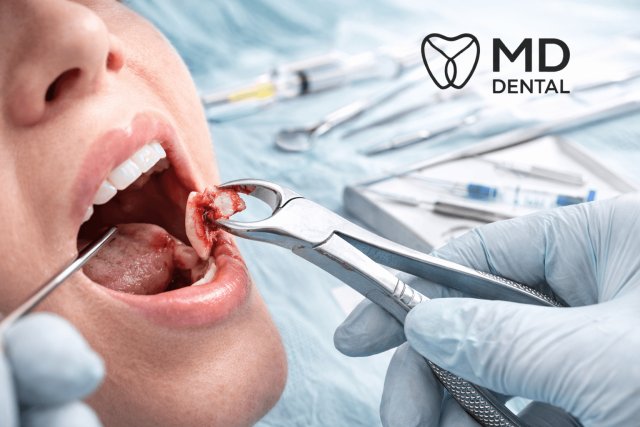
A tooth sits in its socket in the jawbone. When it breaks or gets completely infected beyond saving, the dentist pulls it out of that socket. That’s a tooth extraction.
A dentist’s first instinct is to save a natural tooth. But some teeth are damaged beyond repair, and those don’t survive. If an X-ray confirms the tooth can’t be saved, or that keeping it would harm your oral health, your dentist will recommend removing it.
The usual reasons: tooth decay, advanced gum disease, or a fractured tooth that can’t be restored.
There are two ways to pull out a tooth.
- Simple tooth extraction: Your dentist loosens the tooth with standard tools and takes it out.
- Surgical tooth extraction: If the X-ray shows complications and the tooth can’t come out the regular way, the dentist takes the oral surgery route instead. The gum around the tooth is checked to decide the approach, and sometimes a little bone has to be removed to get the tooth out.
Worried about pain? The area is numbed with local anesthesia, and your dentist will explain everything beforehand.
Pulling the tooth does relieve the pain. What it leaves behind is a gap. Your dentist will check that area later, and if the gap is affecting your other teeth or your oral health, an implant may be the recommendation.
A bone graft is another possibility. If losing the tooth changes how you chew, or nearby teeth start shifting, your dentist will talk you through it.
Root Canal vs. Extraction: A Quick Comparison
Should you pull the tooth, or can a root canal save it? Here’s the quick comparison.
| Procedure | Root Canal | Tooth Extraction |
| Process | Infected pulp from inside the affected tooth is removed | The infected/broken tooth is removed. |
| Natural tooth preservation | Yes | No |
| Local anesthesia during the procedure | Yes | Yes |
| Recovery | 2-3 days (average) | 1 week (average) |
Cost |
A filling or a crown will make the cost go up | The cost of a procedure that involves surgery will differ from a simple process. |
| Long-term cost | Might require future restoration. | If there is a need for an implant or crown. |
Chewing |
Yes, the tooth remains available to perform this function. | No. This function might get affected, and a replacement might be needed. |
| Procedure duration | Shorter (20-40 minutes on average, might vary) | Longer(45 minutes – 1 hour on average, might vary) |
When Root Canal is the Right Option
The differences get clearer once you know when a root canal is the right call.
If the pulp can be cleaned and disinfected and the tooth’s structure can stay intact, a root canal is what your dentist will likely recommend.
A dentist might suggest a root canal, if-
- The tooth is healthy enough to be restored with a filling and a crown
- The surrounding gumline and bone are healthy enough
- The tooth loss might affect chewing function
- A tooth gap might cause bone loss, or teeth shift
If your dentist finds the tooth can’t be repaired at all, it has to come out. And even when a root canal saves a tooth, nobody can guarantee it will never have another problem. After a root canal, talk to your dentist about long-term care and whether you’ll need more checkups.
When Extraction Makes More Sense
Extraction isn’t the first consideration. But when a tooth is in really bad shape, it’s the honest suggestion. Here’s when it makes more sense than a root canal.
- When a tooth has broken below the gumline
- The pulp infection is severe and is not healthy enough to hold a crown
- The surrounding gum is also infected
- A previously healed tooth is re-infected
Your dentist will decide to remove the tooth if the tooth or the gum around it is infected or damaged enough to affect your oral health.
What Happens If You Don’t Replace an Extracted Tooth?
Extraction leaves a gap. If your dentist has advised one and you’re not sure whether to replace the tooth, it helps to know what happens if you don’t. A missing tooth affects more than your smile. It affects your dental health too.
- A gap can change the way you bite. If the tooth helped you chew, you may find chewing harder without a replacement.
- The teeth nearby the empty socket might shift to fill the empty space.
- The gap can trap food, which leads to gum disease and bacterial infections.
- It might lead to bone resorption.
The tooth’s condition, what it does, and where it sits all factor in. Talk to your dentist for guidance on your case.
Cost Over Time: Root Canal + Crown vs. Extraction + Implant
Cost varies with the condition of the tooth. A root canal costs more than an extraction.
Add a crown to the root canal and the cost goes up. There’s also a risk to keep in mind: the tooth can get reinfected later, and if that gets worse, it may have to be extracted after all.
An extraction is rarely the whole bill, either. Once a tooth is out, your dentist will likely suggest an implant with an abutment and crown to replace it, and that raises the overall cost.
One more thing worth knowing: a surgical extraction costs more than a simple one. The final figure depends on how complicated the case is, and whether special tools or a specialist are needed.
Ask the clinic about insurance coverage and financing options available there.
At MD Dental, a single implant package comes complete with the implant, abutment and crown at $1,980.
Learn about our financing options .
Our team looks at your specific concern and your condition to find the root cause of the problem. Diagnosis involves a thorough examination and advanced imaging, and your treatment plan is built from those findings.
There’s no universal answer to root canal vs. extraction. What works for you depends on the cause of the problem and the condition of the tooth. Get diagnosed, and you’ll get guidance that fits your case.
Whether you are looking for a dental clinic offering root canal in Fort Lauderdale or have some other dental issues, contact us to book a free consultation .
Frequently Asked Questions:
Root canal or tooth extraction, which is more painful?
For both procedures, the dentist will use local anesthesia.
You might feel some soreness in the area afterward, though. If the pain continues or you notice any discomfort, contact your dentist right away.
Is it bad to have a tooth pulled and not replace it?
It can. Leaving the gap can lead to bone loss, bacterial infection from food stuck in the space, difficulty chewing, and the neighboring teeth shifting to fill it.
It depends on your situation, and your dentist may suggest an implant if they think it’s necessary.
What does a root canal do exactly?
The dentist takes out the infected pulp from inside the tooth, then cleans and disinfects the area so the infection is gone. After that, the canal is filled and sealed to keep bacteria out. The treatment keeps your natural tooth. Once it’s done, your dentist will examine the tooth and may suggest a crown for extra protection.
How long does it take for a tooth extraction to recover?
Generally about a week, though it varies with your overall health.
If you still have swelling or pain after that, reach out to your dentist.