

Can you get an implant with low bone density? In most cases, yes. Low bone volume doesn’t usually rule out implants altogether. It just means bone grafting often needs to happen first, rebuilding the foundation before the implant goes in. Patients who’ve been told elsewhere that they’re not candidates are frequently candidates once grafting is part of the plan.
That’s the short answer. The longer one involves understanding why bone density matters so much for implants in the first place, what the grafting procedure actually looks like, and what dental implants for low bone density realistically involve in terms of timeline and steps.
Why Bone Density Matters for Implants
An implant isn’t sitting on top of your jaw the way a crown sits on a tooth. The titanium post goes directly into the bone, and over a period of months, the bone fuses to the implant surface through a process called osseointegration. That fusion is what makes the implant stable, the way a natural tooth root is stable.
For that fusion to happen properly, there needs to be enough bone, both in volume and in density, at the implant site. Too little bone, and the implant doesn’t have adequate support. It can fail to integrate, or it can succeed initially but loosen over time under normal chewing forces.
Bone loss in the jaw happens for a few common reasons. Missing teeth are the biggest one: without a tooth root stimulating the bone, that area gradually shrinks. The longer a tooth has been missing, the more bone loss has typically occurred. Periodontal disease destroys bone directly around existing teeth. Long-term denture wear accelerates the same process, since dentures rest on the gum and don’t replace the stimulation a tooth root provides. Age and certain medical conditions, including osteoporosis, also reduce bone density over time.
What Is Bone Grafting for Dental Implants?
Bone grafting for dental implants is a procedure that adds material to the jaw to rebuild volume and density where it’s been lost, creating a foundation solid enough to support an implant. The graft material integrates with your existing bone over a period of months, after which the area can typically support implant placement.
This isn’t an unusual add-on procedure. Bone grafting and dental implants go together often enough that most implant specialists consider it a routine part of treatment planning rather than a complication. The relationship between a bone graft and dental implants is straightforward once you see it laid out: the graft builds the foundation, then the implant goes into that rebuilt bone. Plenty of patients researching dental implants and bone grafting assume the two are separate, unrelated procedures, when in practice they’re often two stages of the same treatment plan. A CT or CBCT scan during your consultation shows exactly how much bone is present and whether grafting will be needed before the implant can go in.
Types of Bone Grafting for Dental Implants
Not every grafting case is the same, and the right approach depends on how much bone is missing and where.
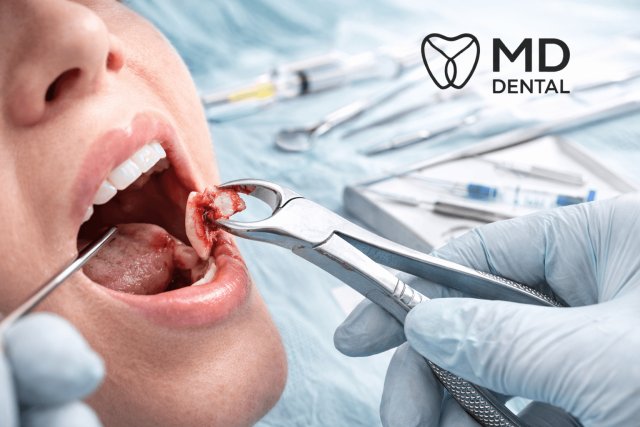
- Socket preservation happens immediately after a tooth extraction, placing graft material directly into the empty socket to minimize the bone loss that naturally follows extraction. This is often the simplest and least invasive type, done at the same appointment as the extraction itself.
- Ridge augmentation rebuilds the width or height of the jawbone ridge when there isn’t enough remaining to support an implant. This is common in patients who’ve been missing a tooth for years without replacement.
- Sinus lift addresses bone loss specifically in the upper back jaw, where the sinus cavity sits close to where implants need to be placed. As bone shrinks in this area, the sinus floor can drop lower, leaving too little room for a standard implant. A sinus lift raises the sinus membrane and adds graft material underneath to create enough space.
- Block grafting uses a larger, solid piece of bone, often sourced from elsewhere in the patient’s own jaw, to rebuild more significant areas of bone loss. This is reserved for more extensive cases.
Bone Grafting Material for Dental Implant Cases: What’s Actually Used
Once the type of graft is decided, the next question is what material actually goes into the site. The dental implant with bone graft procedure can use a few different options, and your surgeon will choose based on the size and location of the defect.
- Autograft uses bone taken from another site in your own body, often elsewhere in the jaw. It integrates well since it’s your own tissue, though it requires a second surgical site.
- Allograft uses processed bone from a human tissue bank. It’s widely used, eliminates the need for a second surgical site, and has a long track record of safety and effectiveness.
- Xenograft uses processed bone material from an animal source, most commonly bovine. It’s biocompatible and acts as a scaffold that your own bone gradually replaces over time.
- Synthetic graft material, made from biocompatible ceramics or other manufactured compounds, is also widely used and avoids any tissue-sourcing concerns entirely.
All of these materials are well established in oral surgery, and the choice usually comes down to the specific case rather than one being universally better than the others.
How Is a Bone Graft Done for Dental Implants?
The bone grafting procedure for dental implants typically happens under local anesthesia, sometimes with sedation depending on the extent of the graft and the patient’s anxiety level. Every bone grafting for dental implants procedure follows roughly the same sequence: the surgeon accesses the area, places the graft material, and often covers it with a membrane that holds it in place while it integrates.
After the procedure, the graft needs time to fuse with your existing bone, generally 3 to 6 months depending on the size of the graft and your body’s healing response. Smaller grafts, like socket preservation done at the time of extraction, sometimes allow for implant placement sooner. Larger grafts, like significant ridge augmentation, need more healing time before the bone is dense enough to support an implant.
Recovery after grafting is generally similar to recovery from a tooth extraction: some swelling and soreness for a few days, manageable with over-the-counter pain medication, with most patients back to normal activities within a few days to a week.
Have Questions About Your Specific Bone Situation?
Reading about bone grafting in general terms only goes so far. Whether you need it, and what type, depends entirely on your own anatomy and how much bone you currently have. MD Dental, providing implant dentistry in Florida, offers a free consultation for dental implants that includes a CBCT scan, so you get a real answer about your bone density rather than a guess.
Are Dental Implants Without Bone Grafting Possible?
Yes, when there’s enough bone present already. Plenty of patients have adequate bone volume and density and go straight to implant placement without any grafting step at all. This is more common for patients who’ve lost a tooth more recently, or who have generally strong bone health.
Mini dental implants, which are narrower than standard implants, are sometimes an option for patients with limited bone who want to avoid grafting, particularly for stabilizing a lower denture. They’re not appropriate for every situation, but they’re worth discussing if grafting feels like more than you want to take on.
For most patients with significant, longstanding bone loss, though, grafting first is what actually makes implant placement successful rather than risky. Skipping a necessary graft to save time usually leads to implant failure later, which ends up costing more time and money than doing it correctly from the start.
Can Someone With Low Bone Density Have Dental Implants? The Realistic Answer
Yes, in the vast majority of cases. Low bone density is common, especially in patients who’ve been missing teeth for a while, worn dentures long-term, or have conditions like osteoporosis. It’s also one of the most thoroughly solved problems in modern implant dentistry. Grafting techniques have decades of research and clinical use behind them, and the materials available today integrate reliably in the overwhelming majority of cases.
What it does mean is a longer overall timeline. Grafting first, healing for several months, then placing the implant takes longer than a straightforward case with adequate existing bone. It’s a real factor in your treatment plan, not something to gloss over, but it’s rarely a reason to rule out implants entirely.
If you’ve been told you don’t have enough bone for implants, or you’re worried that’s the case based on how long you’ve been missing a tooth, it’s worth getting an actual scan before assuming the door is closed. A consultation that includes oral surgery in Fort Lauderdale Fl evaluation can tell you exactly where you stand and what your path forward would look like.
The Bottom Line
Low bone density rules out very few patients permanently. For most people, it changes the plan rather than ending it: bone grafting first, using a material and technique matched to your specific situation, followed by healing time before the implant goes in. The process adds months to the timeline, but it’s well established, predictable, and the standard approach for exactly this situation across implant dentistry.
If bone loss is the reason you’ve been putting off dealing with a missing tooth, MD Dental can map out exactly what your case needs with real imaging instead of guesswork. That conversation, not another search online, is the fastest way to find out where you actually stand.